





Last updated: October 8, 2026
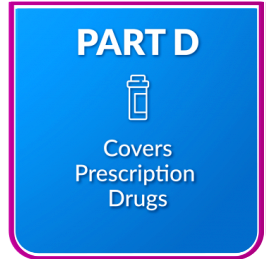
Part D helps pay for covered prescription drugs through private plans approved by Medicare.
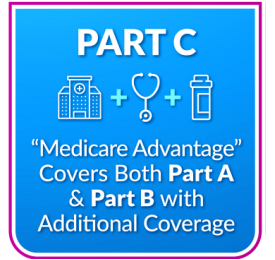
You can join a stand-alone drug plan with Original Medicare or get drug coverage through a Medicare Advantage plan that includes Part D.
What does Part D cover?
Each plan has a formulary, or list of covered drugs, and may group medications into cost-sharing tiers. Before choosing a plan, check your specific prescriptions, doses, pharmacy network, and rules such as prior authorization, quantity limits, or step therapy.
Covered adult vaccines recommended by the Advisory Committee on Immunization Practices have no Part D cost sharing. Each Part D-covered insulin product costs no more than $35 for a one-month supply, with no deductible for that insulin.
What are the 2027 drug costs?
- Maximum yearly deductible: $700. Some plans charge less, have no deductible, or exclude certain drug tiers from it.
- Annual out-of-pocket limit: $2,400 for covered Part D drugs. Once qualifying spending reaches this amount, you pay $0 for covered Part D drugs for the rest of the calendar year. Certain payments made on your behalf also count.
- Costs outside the limit: Premiums, drugs your plan does not cover, and Part B drug costs do not count toward the Part D limit.
- Copayments and coinsurance: Your share depends on your plan, covered medications, and pharmacy.
The former coverage gap, often called the donut hole, was eliminated starting January 1, 2025. Do not use older four-stage drug-cost charts to estimate 2027 costs.
Premiums and income-related charges
Premiums vary by plan. Higher-income beneficiaries may also pay Part D IRMAA, separately from their plan premium. Social Security determines your charge, generally using tax information from two years earlier. Separate filing rules can apply.
2027 income limits: As of October 8, 2026, Medicare’s income and drug premium fact sheet still showed 2026 income limits; final 2027 limits and amounts were not yet posted there. Confirm the year shown before relying on a figure.
The 2027 national base beneficiary premium is $41.33. This is used to calculate late enrollment penalties; it is not the premium every plan charges. A penalty may apply after 63 consecutive days without Part D or other creditable drug coverage following your Initial Enrollment Period. Extra Help recipients do not pay this penalty.
Can you spread out prescription costs?
The voluntary Medicare Prescription Payment Plan lets you pay covered out-of-pocket drug costs through monthly bills from your plan over the calendar year. It does not lower your total costs. If you already participate and stay in the same Part D plan, participation renews automatically for 2027. Contact your plan to review or change your participation. Extra Help may reduce costs for people who qualify.
Who can join?
For a stand-alone Part D plan, you must have Part A or Part B and live in the service area. Medicare Advantage drug plans require both Part A and Part B. Medicare’s citizenship, nationality, or immigration status requirements also apply; see page 9 of the 2027 handbook. Most Medicare Advantage HMO and PPO members must get drug coverage through their plan. Joining a separate drug plan can end that Medicare Advantage enrollment, so check before making changes.
When can you enroll?
You can generally enroll when first eligible or during a qualifying Special Enrollment Period. Fall Open Enrollment runs October 15-December 7, 2026 for changes effective January 1, 2027. Compare prescriptions, pharmacies, and total annual costs each year, even if your current plan worked well.
Compare drug plans or read Medicare & You 2027, pages 83-94. Contact our office for help comparing your coverage options.
Part B - The Medical Insurance Portion of Original Medicare
Medicare Part B beneficiaries receive coverage for medical expenses that are important for outpatient health care. Anyone eligible for Medicare Part A is qualified for Medicare Part B by enrolling and paying a standard monthly premium. Supposing a person is not eligible for Medicare Part A. In that case, a person can qualify for Medicare Part B when turning 65 if they are a U.S. citizen or a permanent resident residing in the U.S. for at least five continuous years.
Coverages Include:
- Physician Services.
- Outpatient Surgery.
- Lab & X-ray Services.
- Ambulance Services.
- Some Preventive Services.
- Durable Medical Equipment.
The Costs Associated With Part B:
- Medicare Part B Monthly Premium – The Amount Changes Annually.
- Annual Deductible – The Amount Changes Annually.
- 20% Co-Insurance – The Covered Medical Expenses Medicare Does Not Pay.
- Any Late Penalty’s Incurred From Not Obtaining Part B Coverage When First Eligible.
A Partial List of Services Not Covered By Medicare:
- Preventative Care & Wellness Programs.
- Routine Hearing Exams & Hearing Aids.
- Routine Vision Exams & Corrective Lenses.
- Comprehensive Dental Coverage.
- Worldwide Emergency Assistance Outside The U.S.
Medicare Part B Enrollment:
Automatic enrollment in Part B Medicare insurance happens during the month of a person’s 65 birthday if they currently receive Social Security retirement benefits or Railroad Retirement Board benefits. If a person qualifies for Medicare insurance because of a disability before age 65, then enrollment is automatic for Medicare Part B when that person is considered Medicare eligible. Medicare Part B benefits start on the first day of the month during the month of turning 65. FYI – If a birthday falls on the first day of the month, the benefits will begin the first of the month, the month before turning 65.
If a person is not eligible for automatic enrollment and wants Medicare Part B when they turn 65, they must apply to get enrolled in Medicare Part B. If a person who is not eligible for automatic enrollment but wishes to continue with their employers’ group health plan, then they will qualify for a Special Election Period at their time of retirement. But, if a person does not enroll in Part B when they are first eligible for coverage and do not qualify for a Special Election Period from CMS. Then CMS will charge a lifetime late penalty to the monthly premium.
CMS Initial Enrollment Period – A Seven-Month Enrollment Timeline:
This Time Frame Includes:
- Three Months Before The Month Of A 65th Birthday.
- The Month Of A 65th Birthday.
- Three Months Following The Month Of A 65th Birthday.
Ways To Enroll In Medicare Part B:
- Create A My Social Security Account At: SSA.gov And Enroll Online.
- Call Social Security: 800-772-1213, Monday-Friday, 7 am To 7 pm EST.
- TTY Users Should Call 1-800-325-0778.
Assuming a person enrolls in Medicare Part B during the first three months of their Initial Enrollment Period, then benefits start on the first day of the month of turning 65. For people waiting to enroll in the month of their 65th birthday or the three months after their birthday. A significant coverage gap can and most likely will occur, depending on when the enrollment application is received and approved by CMS.